


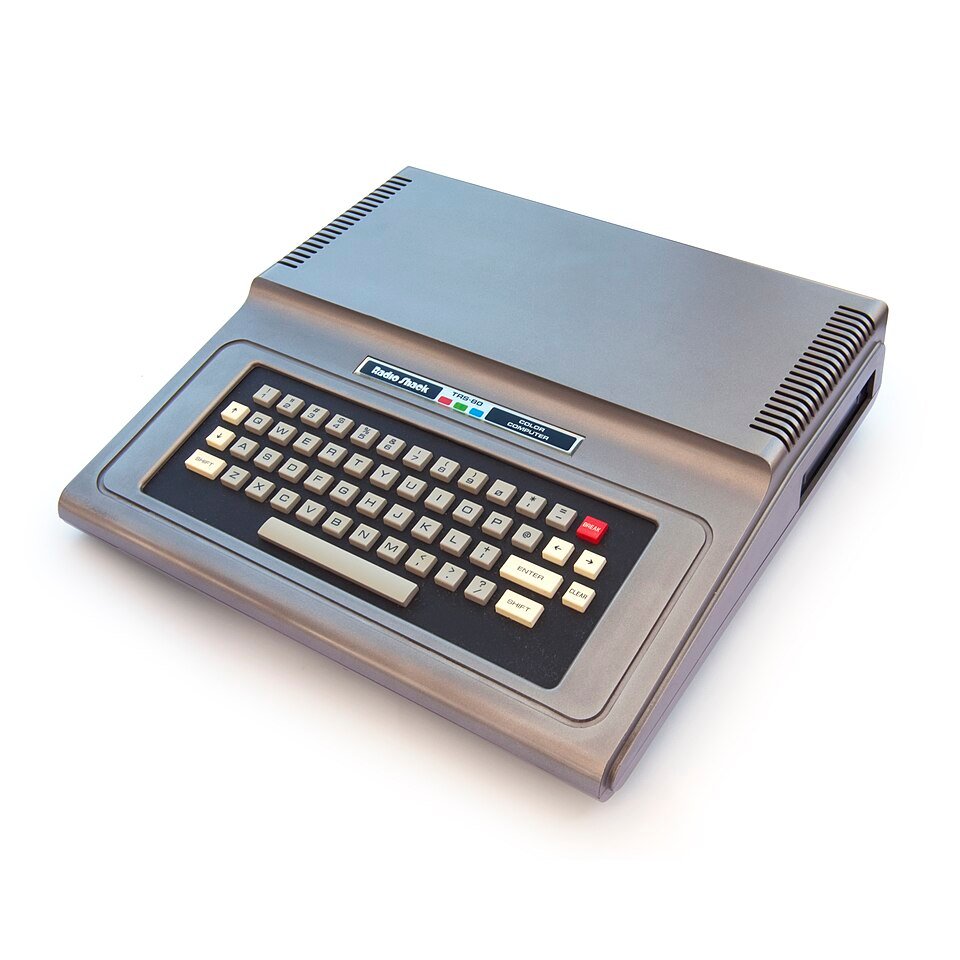
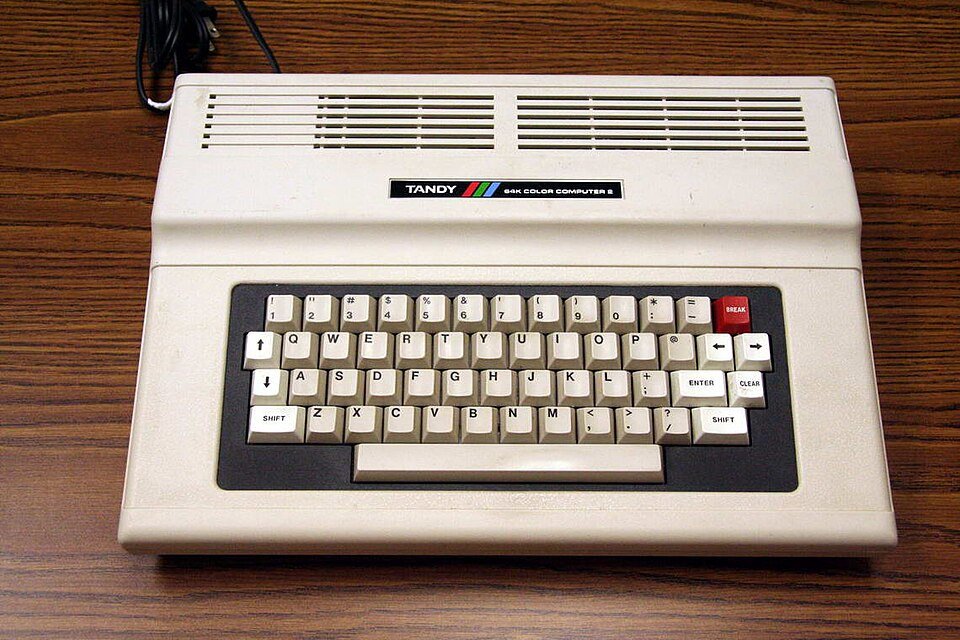
The Color Computer 2, CoCo 2 to everyone, is the colour home computer that Tandy sold in Radio Shack stores from 1983. It is the smaller and cheaper version of the first Color Computer from 1980, and it was offered for 159 dollars: a price meant to get it into lots of homes and schools.
The origins: a terminal for farmers
The CoCo story begins in 1977 with an experimental videotext project at the University of Kentucky, which wanted to deliver information to farmers through the phone line and the home TV set. The contract for the terminal went to Motorola, which designed the AgVision, later sold by Radio Shack as the VideoTex terminal. From that terminal Tandy derived a real computer, with the same case, the same keyboard and almost the same board.
The TRS-80 name was kept to cash in on the brand's fame, with the word Color added to make it clear that this time the computer could produce colours. In reality it has almost nothing in common with the earlier TRS-80s: those used a Zilog Z80, the CoCo a Motorola 6809.
What changed from the first CoCo
- A case about a quarter shorter, with a new, smaller motherboard and power supply
- The 12 V line was removed from the expansion connector: that is why some first-model peripherals, such as the old floppy controller, no longer work
- 16 KB and 64 KB versions; from 1984 the 64 KB model has a proper typewriter-style keyboard instead of the flat-key one
- In the last batches the MC6847T1 video chip adds lowercase letters, which BASIC does not use and the manual does not mention
- Production partly moved to Korea to cut costs
In December 1984 Creative Computing magazine called it the best educational computer under 1000 dollars.
Inside the machine
- Motorola 6809E CPU at 0.89 MHz; with the famous "high speed POKE" the ROM runs at about 1.8 MHz and BASIC goes almost twice as fast, but it is effectively an overclock
- 16 or 64 KB of RAM
- Microsoft Color BASIC and Extended Color BASIC in ROM, plus Disk BASIC with the disk controller
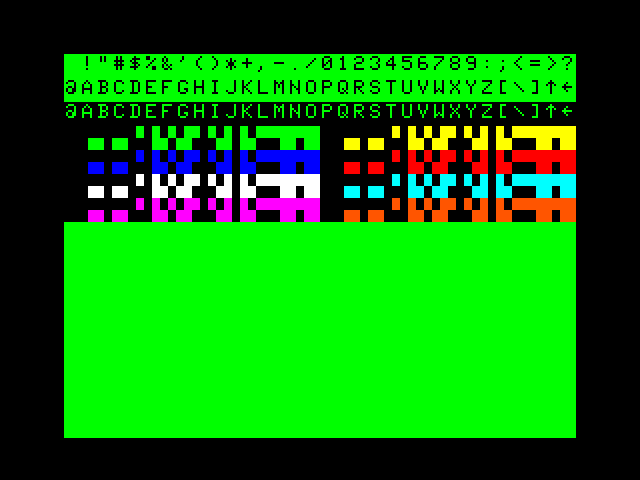
- Motorola MC6847 video chip: 32-column by 16-row text, graphics up to 256×192 dots and 9 colours
- Sound through a 6-bit digital-to-analogue converter, 1 voice
- Ports: cartridges and expansions, cassette recorder, serial, two analogue joysticks and RF TV output
The 6809 was a very advanced CPU for its time but cost a lot more than the 6502 used by the competition, so to keep the price down Tandy saved on other parts, such as the single-channel sound.
Video output and composite mod
The video output is RF only, with no composite signal. On the European PAL version the composite signal is already there at the input of the RF modulator and you just need to tap it. On the American NTSC version it is not that simple: you have to remove the modulator and fit a small board in its place that generates the signal.
- Our composite mod guide for the PAL CoCo 2
- The board that replaces the modulator on the NTSC version
Software and games
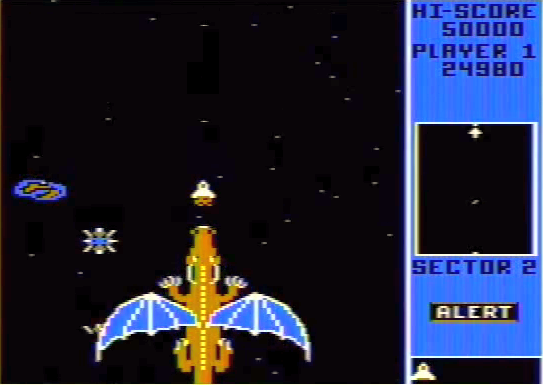
Programs came on cassette, on disk or on Program Pak cartridges, which start as soon as you switch the computer on. Besides BASIC there was Microware's OS-9, a real Unix-like multitasking operating system, surprising for a computer in this class. Among the best-remembered games are Dungeons of Daggorath, Downland, Polaris, Mega-Bug and Draconian.
Siblings, clones and successors
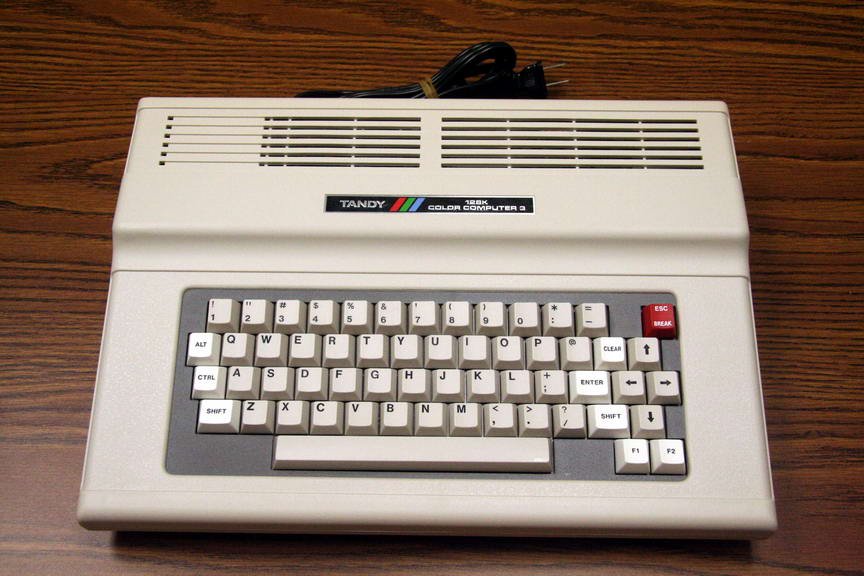
The best-known cousin is the Dragon 32/64, built in the United Kingdom from the same Motorola reference design and also sold in America by Tano. There were also clones in Brazil (Prológica CP-400), Mexico (the Micro-SEP, distributed to schools) and Taiwan (Sampo). In 1986 came the Color Computer 3, with the new GIME chip, 128 or 512 KB of RAM and a double-speed 6809. Tandy ended the Color Computer line in 1991.
Emulators and period material
To try the CoCo 2 without owning one there are excellent emulators, and online there is a large archive with programs, manuals and period magazines such as The Rainbow and Hot CoCo, full of listings and original adverts.


Tandy CoCo2 Composite mod
Let's see how to get the composite signal out of the PAL version Tandy Color Computer 2.
