


THE GERMAN GIANT
Here is a very rare example of the Commodore 64 EDS (Electronic Design Studio), produced only in Germany, but what is it?
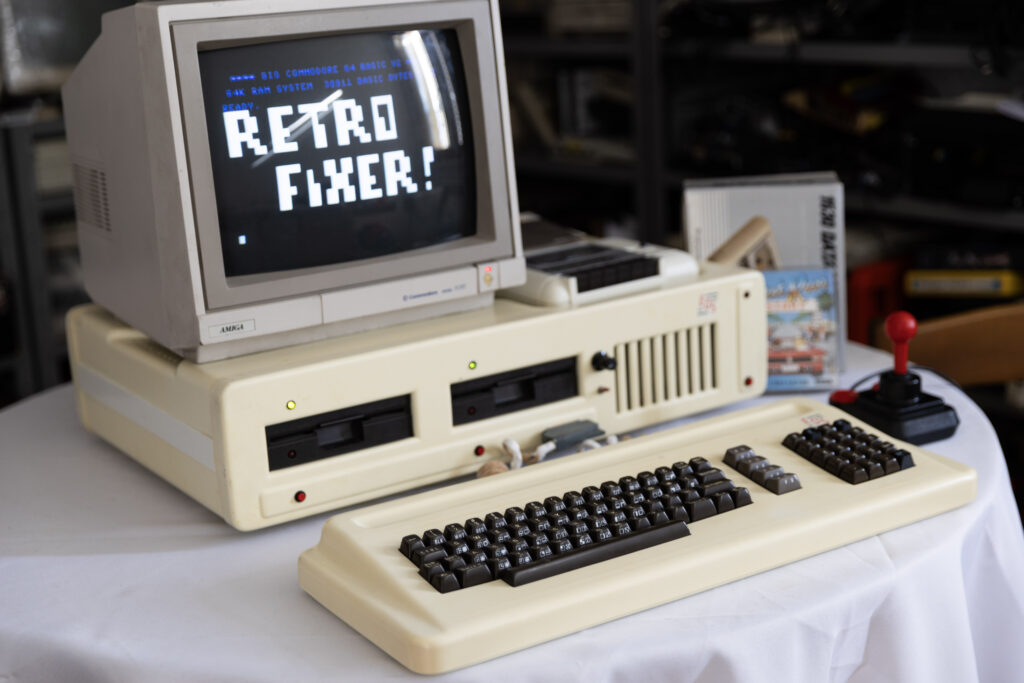
This is a desktop system designed to house the C64’s power supply, cables and peripherals all inside one case, with no cables lying around.
The idea of having everything in a single unit brought some drawbacks with it: first of all it was very bulky and, on top of that, it was quite heavy.
It is estimated that around 300 of these giants were produced. Inside this big box you could have one or two 1541 / 1570 drives, there was room for the C64 power supply, a power strip to connect the power supply and the drives, and in one corner, with the external ports, was a Commodore 64 board. To connect the power and the drives (or the drive), the cables came out of the case to plug into the board’s disk and power ports, which made it even bulkier, ugly to look at and fragile to transport unless these cables were unplugged. Well, after all that work, perhaps it would have been better to fit an internal connector and avoid this roundabout routing.
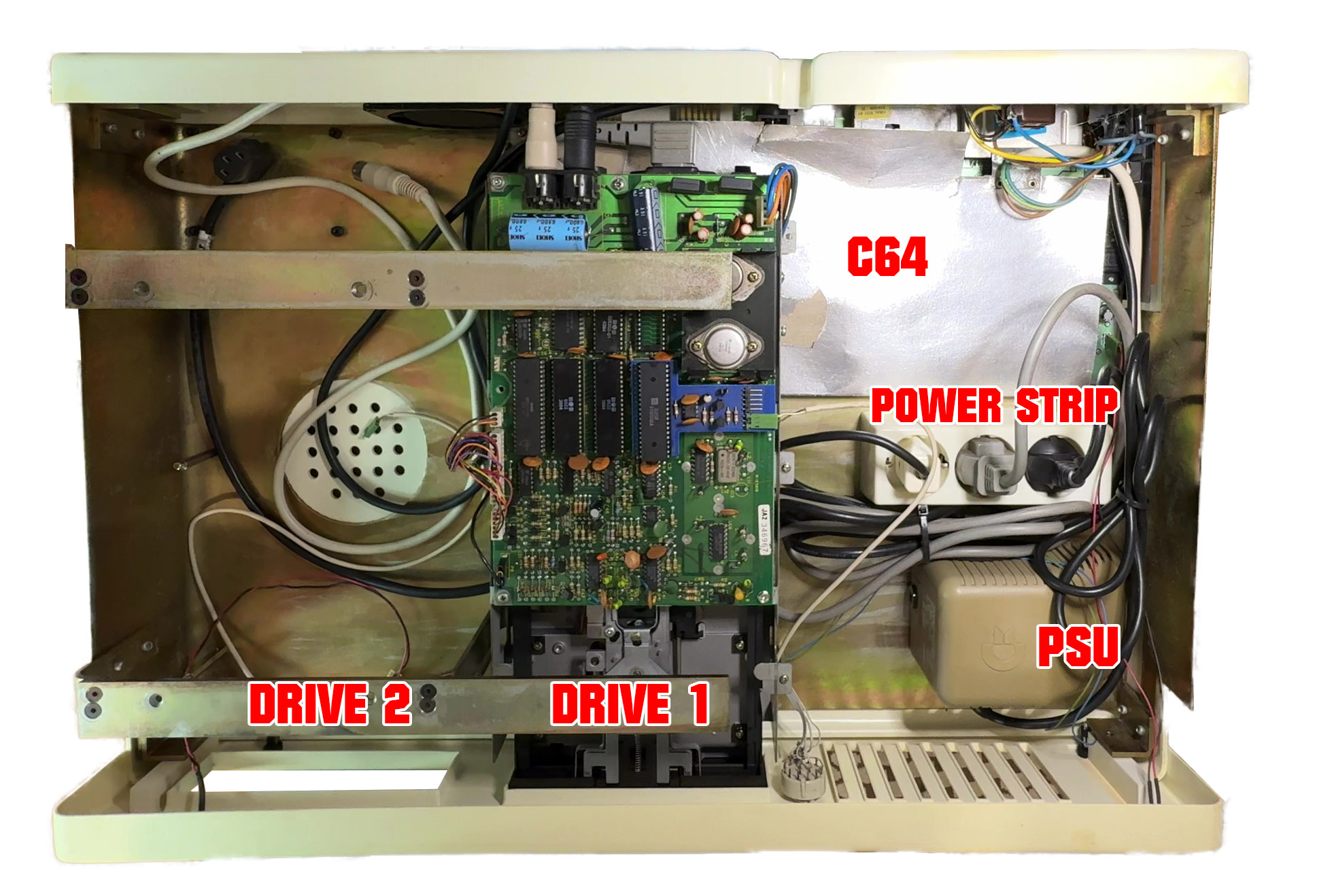
And the modifications didn’t end there: there was a button to reset the C64, physically soldered with internal wires onto the expansion port, and there was also the option of a multi-Kernal board with a selector on the front, so you could switch the computer’s Kernal between 4 available ones, one of them being the original.
Now for the drives! As mentioned, these were mounted internally, without their cases, and placed on brackets to anchor them to the computer’s base plate. They could not be switched on or off individually: the main switch powered the whole computer including the monitor, and in fact there was a nice “German” socket on the back for plugging in the monitor’s power.
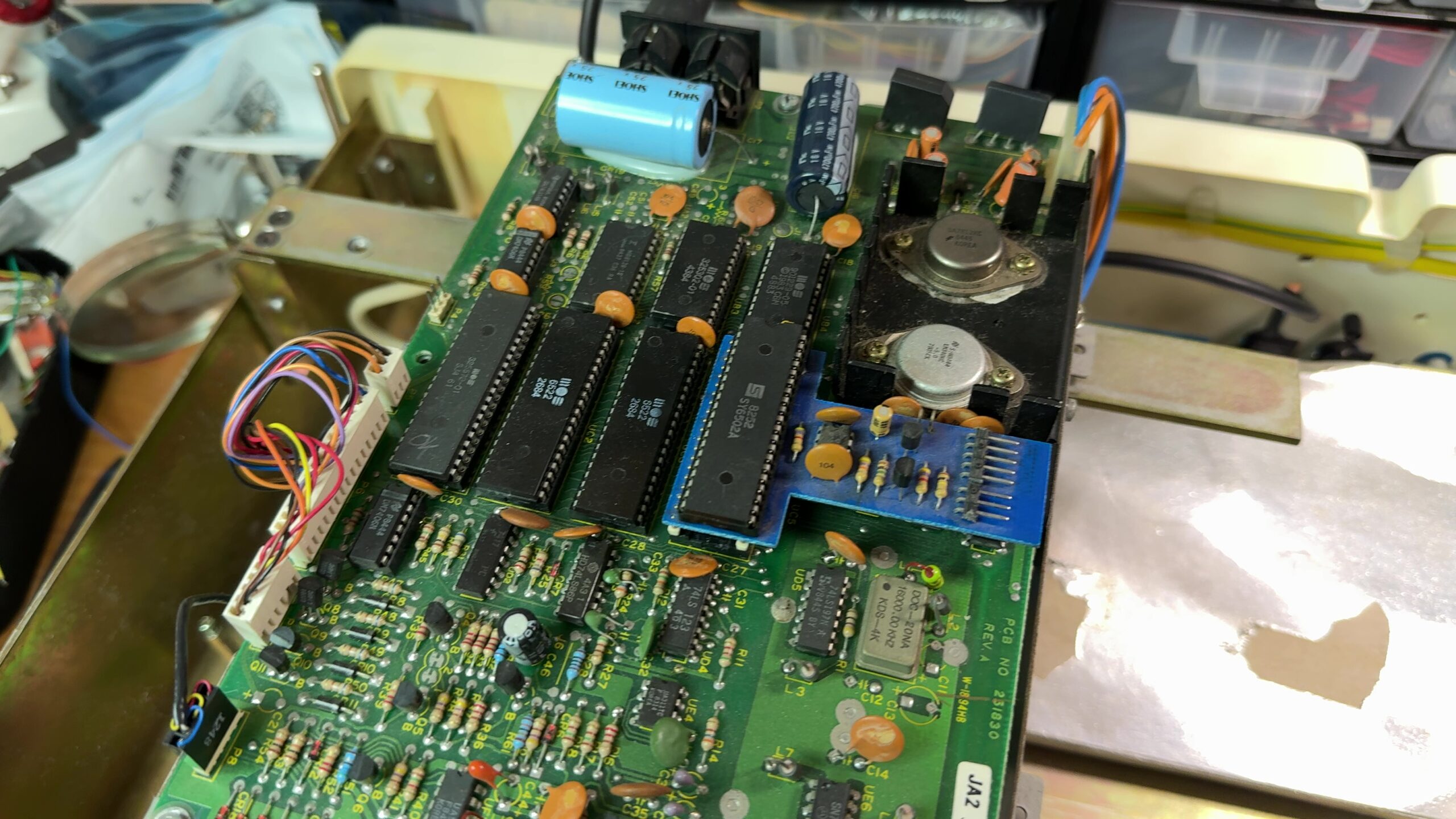
To manage the drives, two buttons were added, one per drive, so they could be reset in case of a loading error.. you know when the C64 drive gets stuck in an endless load and the only way to free it is to switch it off?
To reset the drives, a board was fitted between the CPU (MOS 6502) and the drive’s socket so that a reset pulse could be sent to the floppy.
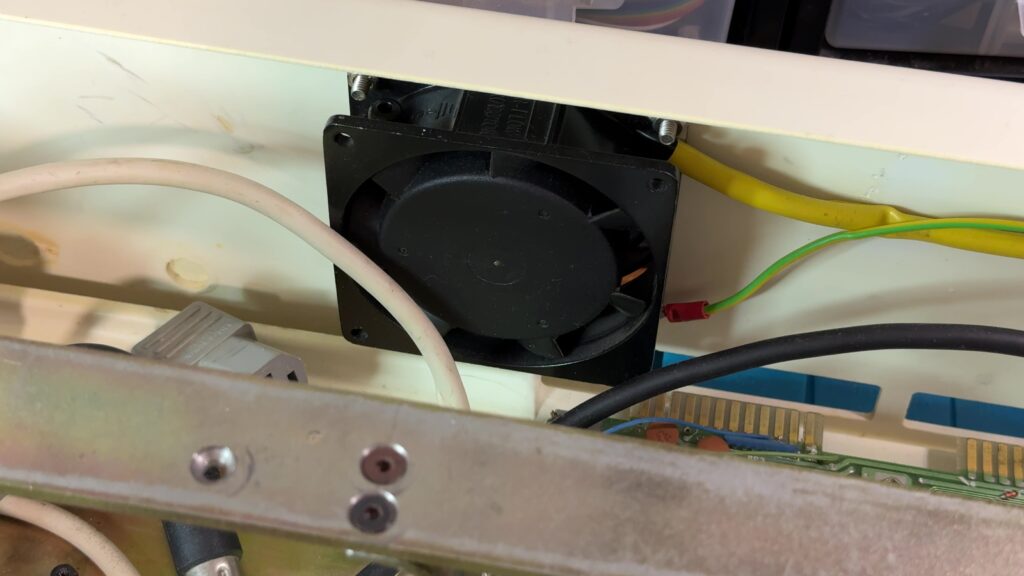
Inside we could also find a cooling fan, either always on or temperature-controlled according to the internal temperature of the case. This huge computer had two moulded recesses in the top cover: one to hold a 1531 datassette with a passage for its cable, and a place to store floppy disks. The monitor went to the left of these bays, right above the drives!
And here is one of the big problems this system had.
The CRT monitor caused interference and disturbed the reading/writing of the drive heads. Personally, I found it impossible to read from the left-hand drive, while the right-hand one still worked. It is probably down to the position and the field generated by the cathode ray tube, or the high voltage of the flyback.
There are three ways to solve this problem: move the monitor further away or to one side, switch it off during reading/writing, or shield the drives. I tried putting a metal sheet over the drives, but it was rather small and was not enough to make it work properly; still, compared with the first attempt, I managed to get the drive that would not read anything to read the directory, if somewhat laboriously.
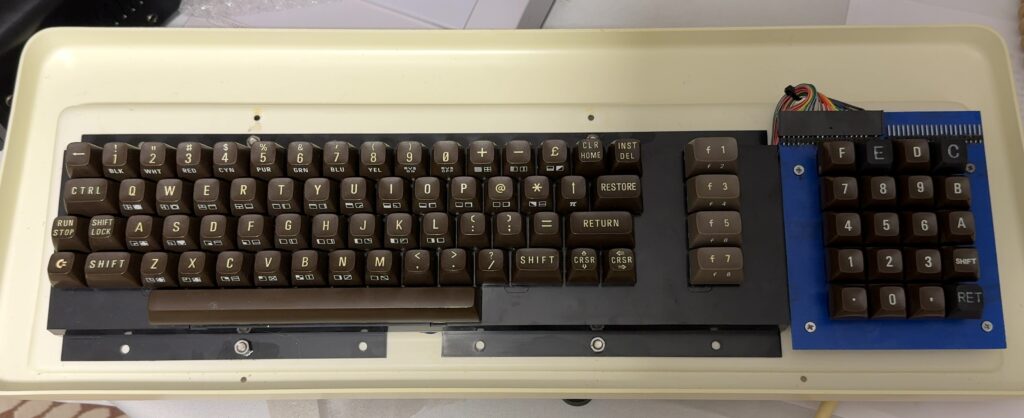
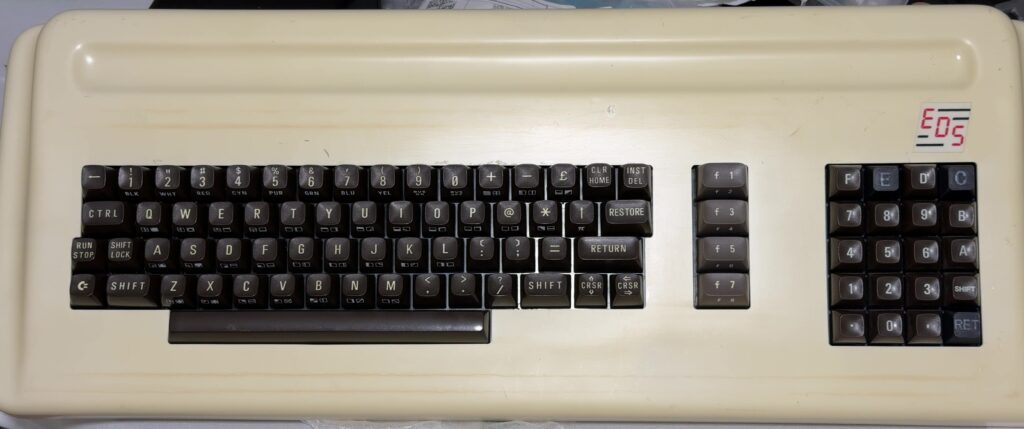
The system came with an external keyboard connected to the main unit by a coiled cable and a 25-pin connector. The keyboard was nothing more than the Commodore 64’s own, fitted into a larger housing (who’d have thought!) with the addition of a numeric keypad with numbers and the letters A to F for entering hexadecimal codes, plus return, shift and semicolon keys.
The keypad was connected directly to the C64 keyboard cable and came out with another connector to the computer’s cable; in short, it was used as a pass-through adapter to connect the keyboard’s female cable to the computer’s female cable.
The whole system was not a success and today it is a very rare computer to find because so few were produced. Personally I find it awkward unless you have a nice desk to dedicate to it and leave it there, but it is an unusual and interesting product, with somewhat ungainly looks. All things considered, the idea of having everything in a single unit was not bad: if you remember, the Commodore 128D followed the same logic, but fortunately it was designed to save space on power supplies, cables and floppy drives.
I’ll leave you with the reconstruction of this German giant!
After this repair I rebuilt the numeric keypad and the reset board. The Gerber files can be downloaded alongside.
The numeric keypad keys, with Fusion360 and STL files, are available to download in the download section reserved for Patreon supporters.
The STLs are available on MakerWorld
https://makerworld.com/it/models/1834979-eds-vc64-keycap#profileId-1959800