Abbreviated by all into SNES has as its product code. SNS-001 while its Japanese version, called Super Famicom, has product code SHVC-001; it is Nintendo's second "living room" console and was released, depending on the country, between 1990 and 1992.
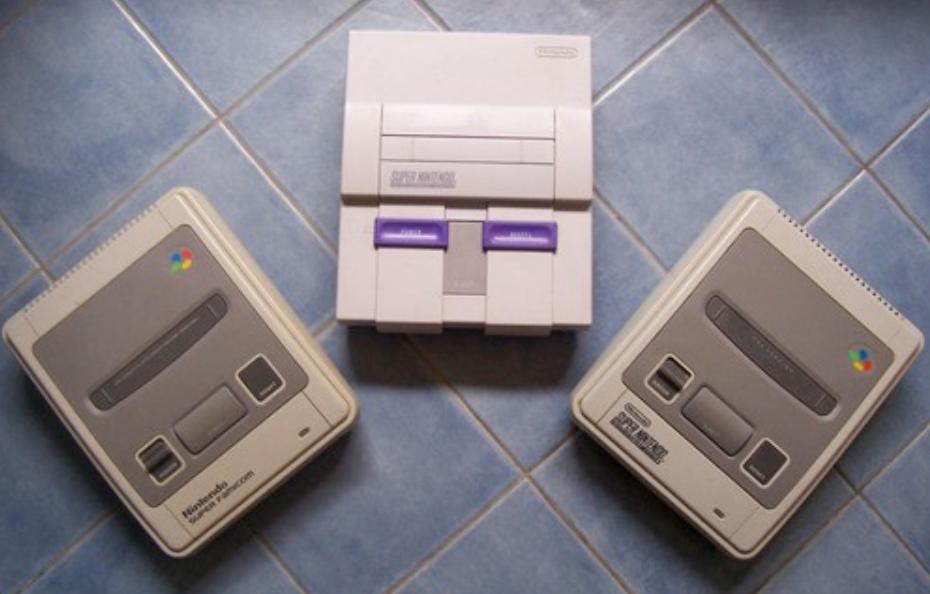
In the image, from left to right, we have: SNES JAP [SHVC-001]- SNES USA [SNS-001]- SNES EUR [SNSP-001]
The protections
CIC
Like its predecessor, the SNES also implements a lock-key control mechanism with new dedicated chips of which one is in the console and the other inserted in each cartridge with contents very similar to that of the NES CIC.
The reasons that made this system necessary are always the same and you can read them here on the right ->
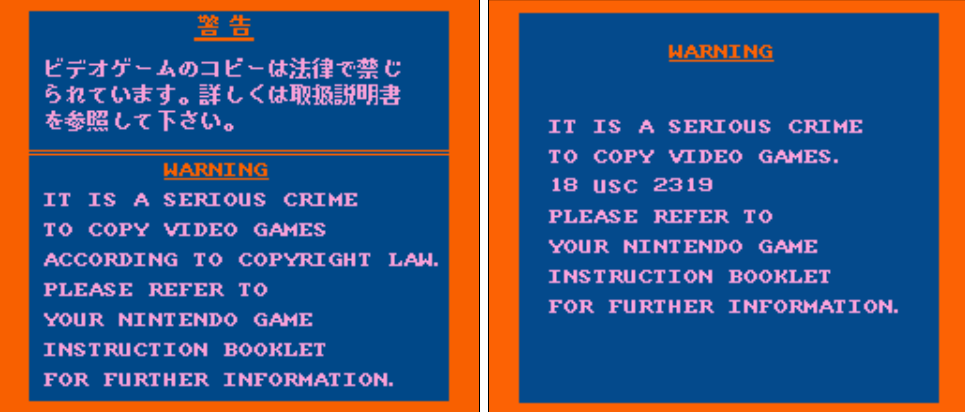
– to give Nintendo global control over the games released for the platform
– to prevent pirate cartridges from booting on the system
– to make it easier to lock out games from different regions
The chips found are as follows:
D411 (NTSC cartridges)
D411A (NTSC cartridges)
D411B (NTSC cartridges)
D413 (PAL cartridges)
D413A (PAL cartridges/consoles)
D413B (PAL cartridges/consoles)
F411 (NTSC console)
F411A (NTSC cartridges/consoles with SuperFX chip, OBC1, maybe others)
F411B (cartucce/console NTSC con chip SPC7110, forse altre)
F413 (PAL consoles)
F413A (PAL cartridges/consoles with SuperFX chip, OBC1, possibly others)
F413B (PAL cartridges/consoles with SuperFX chip, OBC1, possibly others)
D = tipologia Through Hole Mounted
F = tipologia Surface Mounted
411 = NTSC
413 = PAL
A/B = chip revision
US and JAP use the exact same chips so the cartridges, with appropriate modification to the console slot (see below), work reciprocally.
And here are the decoded lock/key codes:
D411 KEY: b14f4b57fd61e98 LCK: _9a185f11e10dec
D413 KEY: b14f4b57fd61e98 LCK: _6a185f11e10dec
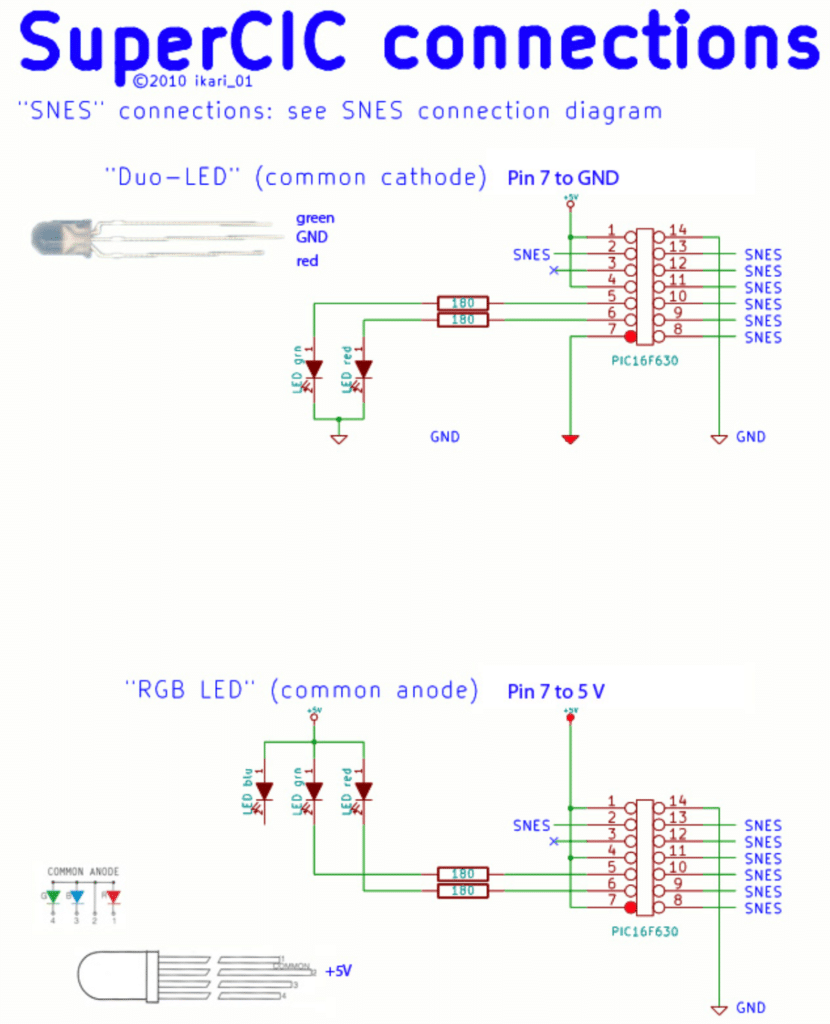
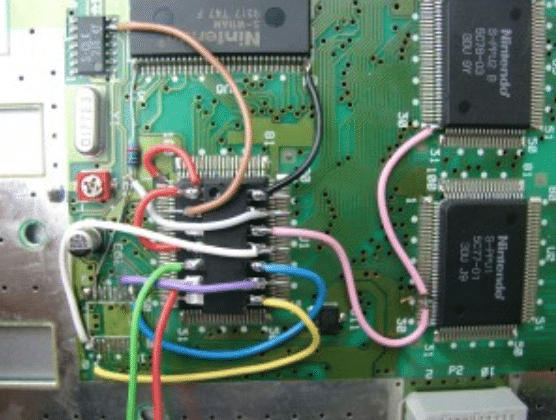
The bypass systems of this pairing are all hardmod and PIC-driven because there are other forms of control in newer games such as Super Mario RPG or Street Fighter Alpha 2 which refused to start if they found the lock-key system somehow disabled (such as by lifting pin 4 and connecting it to ground [e.g., pin 9 of the same chip]) probably due to a circuit analysis of the SNES not possible in the NES. One of the best known is/was the SuperCIC.
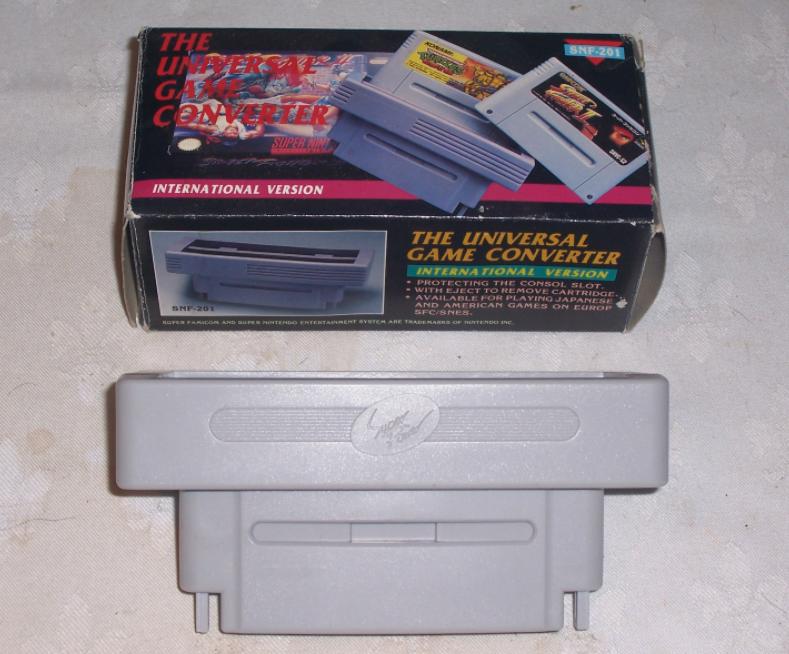
Another bypass system was offered by "adapters" that contained the valid CIC for specific region into which the cartridge of a different region could be inserted.
PHYSICAL PROTECTION
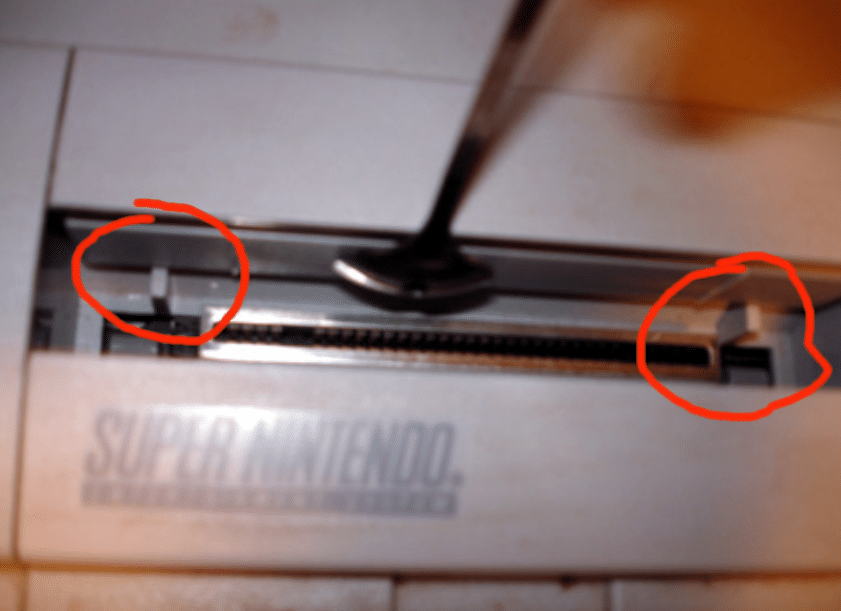
USA and JAP cartridges had a slightly different plastic case with 2 notches that matched 2 tabs in the cartridge slot; this required cutting off the plastic tabs in the slot so that JAP cartridges would also be accepted.
REGION SIGNAL CHECK
NTSC video signal is at 60Hz while PAL video signal is at 50Hz; some games (e.g., Donkey Kong Country, Earthbound, Tetris Attack, Megaman X, Super Metroid) check the console's video signal and if it is different from the region for which the game is programmed the game does not start showing an error message programmed into the game.
This check could be bypassed with a hardmod that added a switch to change between 50Hz and 60Hz.
Finally, programmers can indulge in how to control hardware and program by, for example, inserting checks on the presence and size of save memory (against pirate cartridges) or by checking game data to prevent tampering with code to bypass other checks and add features that make the game unplayable or even interminable !
The game Earthbound is a brilliant example of how this kind of protection can be implemented:
Summing it all up, the SNES shows the implementation of systems already in use and at the same time offers some new insights that will also be recycled to some extent in future devices. Nothing "extreme" but still worthy of being known !